GMB warns against offshoring Faslane dry dock work
GMB warns against offshoring Faslane dry dock work
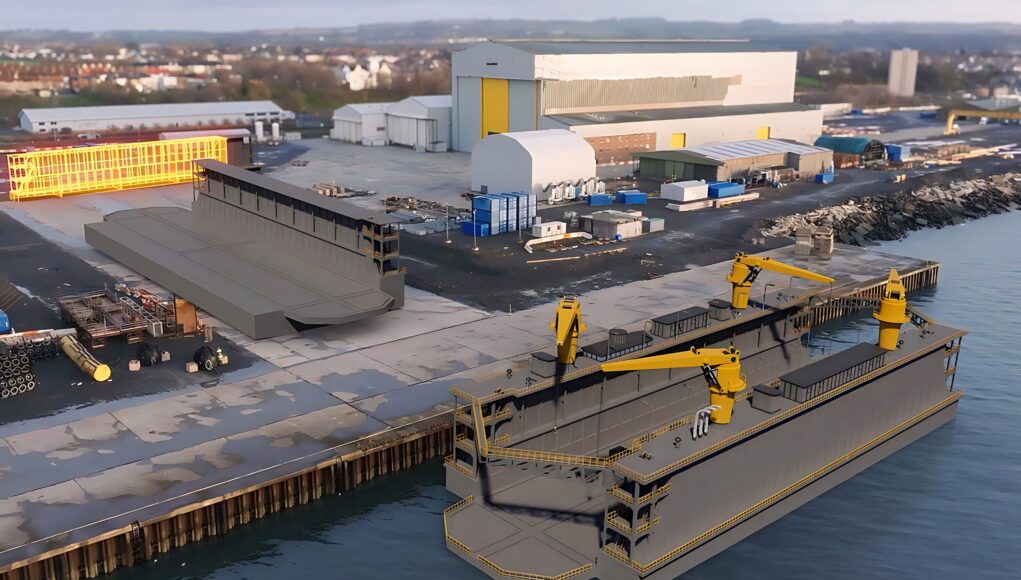
EXCLUSIVE – GMB Scotland Secretary Louise Gilmour has written to Defence Secretary John Healey describing reports that Programme Euston dry dock contracts could be awarded overseas as “national self-harming on a grand scale,” warning that limiting UK workers to installing floating harbours built abroad represents “a paucity of ambition” that is “pitiful.”
The letter, dated 26 May 2026, follows an earlier letter sent on 24 March 2026 to which no response has yet been received. Gilmour said the union must again raise “the gravest concerns at the prospect of this crucial defence infrastructure being built anywhere but the UK.”
Programme Euston is the Royal Navy’s plan to build two floating dry docks to support submarine maintenance at Faslane, aiming to deliver a resilient out of water engineering capability at HM Naval Base Clyde by the early 2030s, with a Programme Business Case due in mid-2026 and procurement decisions to follow. The need is expected to grow as Astute-class boats remain in service, Vanguard submarines continue deterrent patrols, and Dreadnought-class vessels begin to enter the fleet.
GMB argues the manufacture, fabrication and installation of the docks should “create and protect hundreds of well-paid, skilled jobs and apprenticeships from the east coast of Northern Ireland to the east coast of Scotland and in supply chains across our country.” The letter describes the docks as “strategically vital national assets linked directly to the operation and maintenance of the UK’s nuclear submarine capability.”
GMB also drew a direct comparison with the Damen contract earlier this year, when the Dutch company was awarded contracts to build Royal Navy support fleet vessels including tugs for Faslane, with UK yards not invited to tender. “If speculation is correct, the Ministry of Defence seems intent on repeating the same mistakes with Programme Euston,” Gilmour wrote.
Navantia UK’s yard in Methil, Fife is among those making the case for involvement in the programme. As the UK Defence Journal reported in May, GMB Scotland has already written to Healey arguing the yard has the potential to be a pillar of UK engineering capability and a perfect example of how defence contracts could be built on secure domestic supply chains. The yard has grown from 180 workers when operations began in January 2025 to 260 today, with 54 apprentices in training and a further 100 jobs in the pipeline. Richard Baker, the Labour MP for Glenrothes and Mid Fife, said: “It’s amazing to think it’s just two years since Labour ministers working with Navantia had to save this yard, and what’s happened here since then is transformational.”
The letter argues that when defence contracts leave the UK, “the taxpayer loses twice, first through the loss of jobs, wages and economic activity, and again through the long-term erosion of strategic industrial capability.” Gilmour added that at a time of growing geopolitical instability, “it makes no sense to scatter critical infrastructure projects for the UK’s nuclear fleet around the world.”
Gilmour called on the MoD to weigh the social value of sustaining skilled industrial employment against any short-term savings from offshoring, writing that “the value of apprenticeships, community regeneration, secure long-term employment and resilient supply chains must be weighted against any short-term savings gained by offshoring contracts.”
The letter closes with a request for a response from Healey and an offer to discuss the matter further.
35 COMMENTS
-
Nuclear qualified dry docks are very expensive to get through qualification. Starting from scratch with no experience is expensive and adds to high degree of risk that country can’t afford. The dock should have been upgraded years ago, there’s a very tight time line as it is.
Reply
Raises the question of why a country with a large fleet of nuclear boats is “starting from scratch with no experience” and then also why a country with a large fleet of nuclear boats is not seeking to gain the means to maintain their own fleet (especially if the manure were to hit the air circulator).
Reply
Because they are only built once every 25-30 years. The US has a bigger fleet and have more nuclear qualified floating drydocks that keeps up the work over decades. Unless you plan to pay people to do nothing for the majority of their working lives it’s going to be starting from scratch.
Reply
So let’s say the shit does hit the fan. That drydock is a prime target. Lets say they manage to hit it and take it out of action. Is there anyone around to actually fix it or has this just rendered our entire submarine force expensive bath toys tied up in harbour?
Reply
I knew the people who ran the procurement for the last one, the youngest one is 75, another is over 80. Please explain how do you intend to stop people retiring and dying.
Reply
I don’t see how the fact that people retire should be an absolute show stopper to the continued functioning of the navy. If this knowledge is not being passed on then that would suggest to me a fundamental failure in the training pipeline.
Reply
Training for what, the prospect of work in 30 years time?
Why should the MOD spend, what would amount to billions, on an entire industrial process just to build 2 drydocks we won’t need replacing for decades. We have no prospect of exporting these things, it’s utter garbage from the union who wants to milk more money out of the MoD.
Order them from the Americans, and spend the other couple of billion on the subs ( and entire industry that goes with them ) that’ll take advantage of them.
Reply
Training to maintain our fleet of nuclear submarines which we have been and continue to build this entire time. As for no prospect of export the fact that seemingly we need into import them suggests otherwise. Also until recently we weren’t exporting nuclear submarines either but that did have people go “oh well I guess we’re no longer a nuclear power – no money in it you see”.
Reply
What’s difficult to understand. There’s finite resources available, spending that on people going nothing for 35 years is not the best use of resources. You tried to be cleaver and now desperately trying to concoct a justification for a statement that you made without any knowledge whats that means
Reply
The whole ‘nuclear certified’ thing to me is a bit of a shibboleth. It’s not like the dock is building a nuclear reactor. There should be a set of certified standards for what a drydock needs to look like. Then… build to the standard. That eliminates the whole ‘we’re starting from scratch’ baloney. Write a spec. Have somebody build to the spec. Done.
Reply
If you’ve Followed the Davenport Nuclear Dock Certification !l..
You Would Certainly Now the Problems likely to hit the ‘Huston’ Floating Dry Docks When there Designed and built….!
Just how Serious is it..???
Well Ask the Russians Who’s Swedish Built Floating Dock Seriously Damaged their Carrier..!!!
Seems Inconceivable that there Will Not be Some External Influence in the Building And Designing of these Floating Docks..!
My Guess is The Design of these Vessels Once the Certification Requirements Are Known will be Abroad.!..Possibly Japan or South Korea..??
The Main Shell Would then be Built There and Transported for Final Fitting in Britain…I’ve Suggest INCHGREEN due to its Proximity to Faslane,..
And That Dry Dock Could Then Perform Periodic Maintenance and Nuclear Recertification for the Floating Docks at that Site Without Having to Move Them Far….!
Likely To be 2..! I would Suggest 3 in Rotation..!
Perhaps this is All to much Common Sense for Leaders…? Reply The Russian’s didn’t take care of their Swedish-built floating dock. I assume the Brits would take care of theirs. This just seems to be another case of excessive government red tape preventing anything from getting done. Reply The fact that the Russians had a problem just Underlines the Possiblity of An Accident…!
HEALTH AND SAFETY Have Come A long way …!
Some Would say to far…! Nevertheless These Floating Docks Will Carry VESSELS With NUCLEAR REACTORS And One Can Expect them to be H&S BOMB PROOF to the Extreme.!!..
With Multi Redundancy Systems.!..Safety And Security etc..
Simply Writing the Nuclear Certification Requirements Could take Some Time..!? Reply They had 4 leaks from reactors in the dry dock at Devonport, 2 of which are from the BNs. Reply What does that have to do with writing a detailed specification and even developing blueprints for a build? The dock didn’t cause the submarined to leak. Poor practices and potentially poor material condition caused the leaks. Reply You are regularly dealing with primary loop cooling water in the dry dock. Despite being designed not need refueling Vanguard developed a small leak in fuel rods forcing a refuel. You seem to have this idea that you wont have to handle highly enriched fuel at around 90%. It’s an incredibly complex task that has extreme outcomes if anything goes wrong. The people who designed the last one are either dead or long sinced retired. The number of people that have the experience and expertise to actually design one is extremely small and mostly have American accents. The larger US fleet and the Atlantic and Pacific fleet means the US builds floating dry docks at a rate far greater than one every 35 years. I knew the people who ran the procurement on the last one, the youngest is now 75. Reply Again, what does that have to do with writing a detailed specification and developing blueprints. The problem of having a primary cooling loop failure IS NOT NEW! If the prints had been saved/digitized from the last dock and a specification for what it means to be ‘nuclear certified’ existed, there would be no need for the angst or for digging up 75 year old engineers. Work smarter, not harder. Everything you just listed is an EXCUSE. You behave as if things have to be done the same way they were done 25-35 years ago. Reply Are you incapable of basic comprehension. There’s no one who is qualified to desing and build it in the time needed. This may actually come as shock to you but they stopped making 40 year old electronics decades ago. You cannot simply copy the old design. The hydraulic and chips used then are long since out of production. This may also come as surprise to you but nuclear regulations also change. See the huge expensive changes at Rosyth for details. Reply My Guess Would be Other Factors Will also Need Consideration Such as
Drone attack or Terrorism..!
The fact is We Don’t Know What this Certification will Look Like or Entail..! Reply Hmmm … perhaps an opportunity for an AUKUS Pillar 1 consortium development and production project? Baseline spec to be provided by Uncle Sugar, tailored/updated as necessary for RN (and eventually probably RAN) specific requirements. In due course, encourage logical, productive industry teaming relationship(s) for the build cycle. Win-win proposition: Brits obtain economic/industrial development advantages and presumptive lower cost of development; USN obtains some access to additional, forward-based, desperately required submarine maintenance and refit facilities. Perhaps, the USN could even be persuaded to provide the necessary future GBAD for HMNB Clyde. OK, time for the next alligator 🐊 in the marshes … 🤔 Reply - Trade unions should be barred from ALL defence related work and learn to shut up. Nothing but communists, always were, always will be. Reply The trade union movement in the UK predates Communism by some degree and is related to workers rights and Collective bargaining within a capitalist system.. it go nothing to do with communism which is all about collective ownership of the means of production….. It was the Union movement that created the way you work today.. Reply
-
There would be long interminable delays as the yard does not have the qualified/trained personnel in attempting to build Faslane. The need is for speed and quality and that should override all decisions.
Reply
I think this is my position as well.
Can they start work quickly? Yes or no?
Do they have the skills now? Yes or no?
Does Defence need to wait? Why should it?
Military need for me should always override other considerations for me. Reply The last one was built in the 90s. I knew the people who ran the procurement, they are in their 70s and 80s now. You can assume that anyone that was middle aged then is now either dead or retired. The dock should have been replaced 5 years ago. There’s no time to wait to start from scratch. Reply So what are you saying, build abroad if necessary?
I read your point above, makes sense, if we have a much smaller fleet then these things are not built to a drumbeat, if we only ever have a handful in use. Reply Building abroad is the only way to meet the timescales before the current one hits beyond reasonable repair. The process to update Faslane and Coulport should have started 10 years ago. If the unions wanted the work they should have been campaigning for more defence spending in 2016. Its too late now. Reply Right. Yes, I agree, makes sense to me. Reply - it’s just a floating dock, we are not exactly re-inventing the wheel here. Yes, you need coded welders, yes in needs to be nuclear certified but it’s not like we are going to be removing reactors or re-fuelling the subs in it. At most it will be replacing acoustic tiles, shaft and pump jet out for a refurb and anything watertight related overhauled from the outside and everything else will be inside. Thanks to these goons in power, the steel to build it will be potentially 50% more expensive as we don’t produce it here anymore and it will have to be imported with a potential 50% tariff Reply 4 leaks from the reactors in the dry dock in Devonport. 2 of came from the BNs. Reply
-
If built here it will take years. likely cost more and have issues, GMB want every thing done here but some times thats not the right choice. Make some thing not made here, with no plans or any thing.
Reply
One Wonders if the GMB Is Serious or Just Waving the Trade Union Flag…!
Fully Knowing that What there Asking Would be Difficult in the Extreme..! Reply - Its just do what unions always do cry about why its done here than take years and more extra money to do it, no way would be cheaper or on time if made here, Reply
-
I’m not a fan of Government intervention but this kind of major Government expenditure (tax-payers money) is one area where they can, and should, intervene.
There’s at least one world-class UK based designer of dry docks (Clark & Standfield; Lobnitz Marine) and Navantia UK are clearly interested in building the things at their Methil yard in Fife.
The UK has the resources to do this but the politicians have to back them with OUR money! Reply -
I always find some of these arguments slightly circular. People say Britain shouldn’t build these dry docks because we haven’t built them for years, or because somebody abroad has done more of them recently. But if that logic had always been followed, Britain would never have built anything new again after the first gap in workload.
The nuclear accreditation point also gets thrown around as if it ends the debate. The dock itself isn’t a reactor. Much of this is heavy engineering, steel fabrication, marine systems and integration. The UK nuclear standards and operating environment still apply when it enters service here. If parts of that capability chain need strengthening, surely infrastructure tied to Faslane and the deterrent is exactly where you would want to strengthen it domestically rather than accept permanent dependence.
Also, a cheaper dock is not necessarily cheaper to Britain once you count UK tax receipts, skilled jobs, apprenticeships, supply chain work, future capability, knowledge retention and the ability to support your own fleet long term. Money spent in Britain partly circulates back through wages, suppliers and taxes. Money exported largely leaves.
I’ve also seen the argument that Methil might get a one-off contract but there’s no long-term market for this type of work. Maybe, but strategic infrastructure is not always justified purely on whether you can export endless copies afterwards. Skills in heavy fabrication, marine engineering, modular construction and major infrastructure projects transfer into other defence, offshore and industrial work. You don’t rebuild capability by refusing to use it. The “overseas yards will be quicker and more experienced” point is probably the strongest criticism and fair enough to raise. Timelines matter. But there’s a difference between saying foreign involvement may help delivery and saying Britain therefore shouldn’t build strategic infrastructure here at all. At some point you either rebuild capability or you permanently outsource it. Nobody is saying Britain should build everything inefficiently regardless of cost. But if infrastructure connected to Faslane and the UK nuclear submarine force is automatically assumed to belong overseas because “someone else has done it more recently”, then it is fair to ask what we actually mean by sovereign capability anymore. Reply